
Malka Baran (z”l)

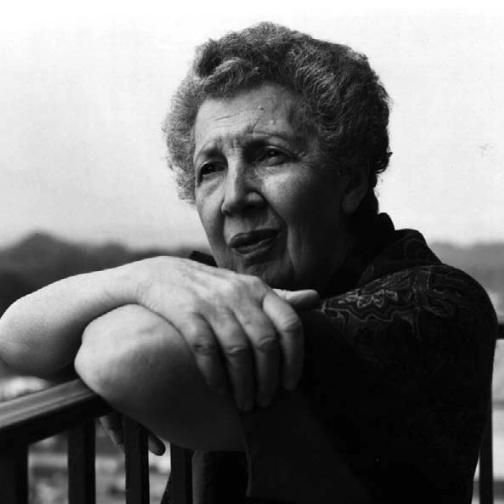

January 30, 1927 – May 7, 2007
Malka Baran, whose birth name was Mela Klin, was born in Warsaw, Poland on January 30, 1927. When she was one year old, her parents Isaac and Bela settled in the southern Polish city of Czestochowa on the Warta River. Malka also had a younger brother, Henek.
Malka’s happy childhood was brutally cut short when the Germans invaded Poland on September 1, 1939. By Sunday, the Nazis captured Czestochowa. Eventually, city’s Jews were forced into the the Czestochowa Ghetto.
On Yom Kippur 1942, the Germans began the mass deportations to Treblinka concentration camp. On the first day of the deportations, Malka’s mother was sent to one side—she later died in Treblinka—while Malka, her father, and her brother were sent to the other. Isaac and Henek were forced to work on the railroad. One day, they failed to return from their labor assignment; they had been shot along the railroad tracks.
Malka and the other remaining Jews were forced into the so-called Small Ghetto. In 1943 she and others living there were sent to a labor camp where they were forced to work in a munitions plant in terrible conditions. She survived bouts of boils and typhus. Malka and other women at the camp helped conceal a toddler whose mother had smuggled him into the camp. A German foreman discovered the toddler, but he decided to let him live.
Malka was liberated by the Russians in January of 1945. She and her friend Shoshanka encountered a kindly Jewish man from Leningrad who was a supply officer in the Red Army. He invited Malka to join his family in the Soviet Union, but the plan fell through. As Malka and Shoshanka traveled with a Red Army unit to meet up with the supply officer, they found themselves all alone on a dark night with dozens of soldiers. They expected the worst, but an officer watched over them, covered them with a blanket, and protected them. This evidence of human kindness touched her deeply and helped her begin her emotional recovery.
Malka returned to Czestochowa for a while, then made her way to a displaced persons camp in the American zone of Austria. Here she met her future husband, Moshe Baran, who was a partisan during the war. Malka and Moshe went to Israel before leaving for the United States. They settled in New York, where Malka worked as a preschool teacher. She later earned her bachelor’s and master’s degrees and went on to become the director of the preschool where she taught. After Malka and Moshe retired, they moved to Pittsburgh to be near their daughter and four of their grandchildren. (Information from Yale’s Fortunoff Library)
Snapshots by Malka Baran
From Flares of Memory: Stories of Childhood During the Holocaust
Chestochowa, Poland, 1937–1938
Early evening in the city. My friends and I stroll
up the avenue. I am giddy, happy, joyfully
aware of my new blue coat lined with white fur, and
my smart little hat made of the same fabric.
Big white fluffy snowflakes fill the space
between the dark blue sky and the pavement.
The trees are covered with puffs of white.
We are carefree! The world so pretty.
“Excuse me, what time is it?”
my friend stops a passing lady.
The answer is politely given, sometimes with a smile.
We walk on, giggling quietly. It’s my turn now.
“Excuse me please, what time is it?”
And so we continue up the avenue.
• • •
My skirt matches my brother’s shorts,
the same white tops for both of us.
We love our new clothes and walk proudly—
Mother waves from the window, her face bright with pleasure.
• • •
My childhood . . . long ago . . . in that other life.
The Avenues, the children, my loved ones—
Where are they all?
In clouds of smoke and fumes they went
Buried in ditches filled with blood—
And only memories remain—
Snapshots, framed in pain and sorrow
Snapshots of a childhood murdered.

More about Malka
Malka Baran | Fortunoff Video Archive for Holocaust Testimonies