Righteous Among the Neighbors is a project of the Holocaust Center of Pittsburgh that honors non-Jewish Pittsburghers who support the Jewish community and take action to uproot antisemitism. In partnership with the LIGHT Education Initiative and Mt. Lebanon High School, student journalists interview honorees and write profiles about their efforts.
Article by Blake Silverman
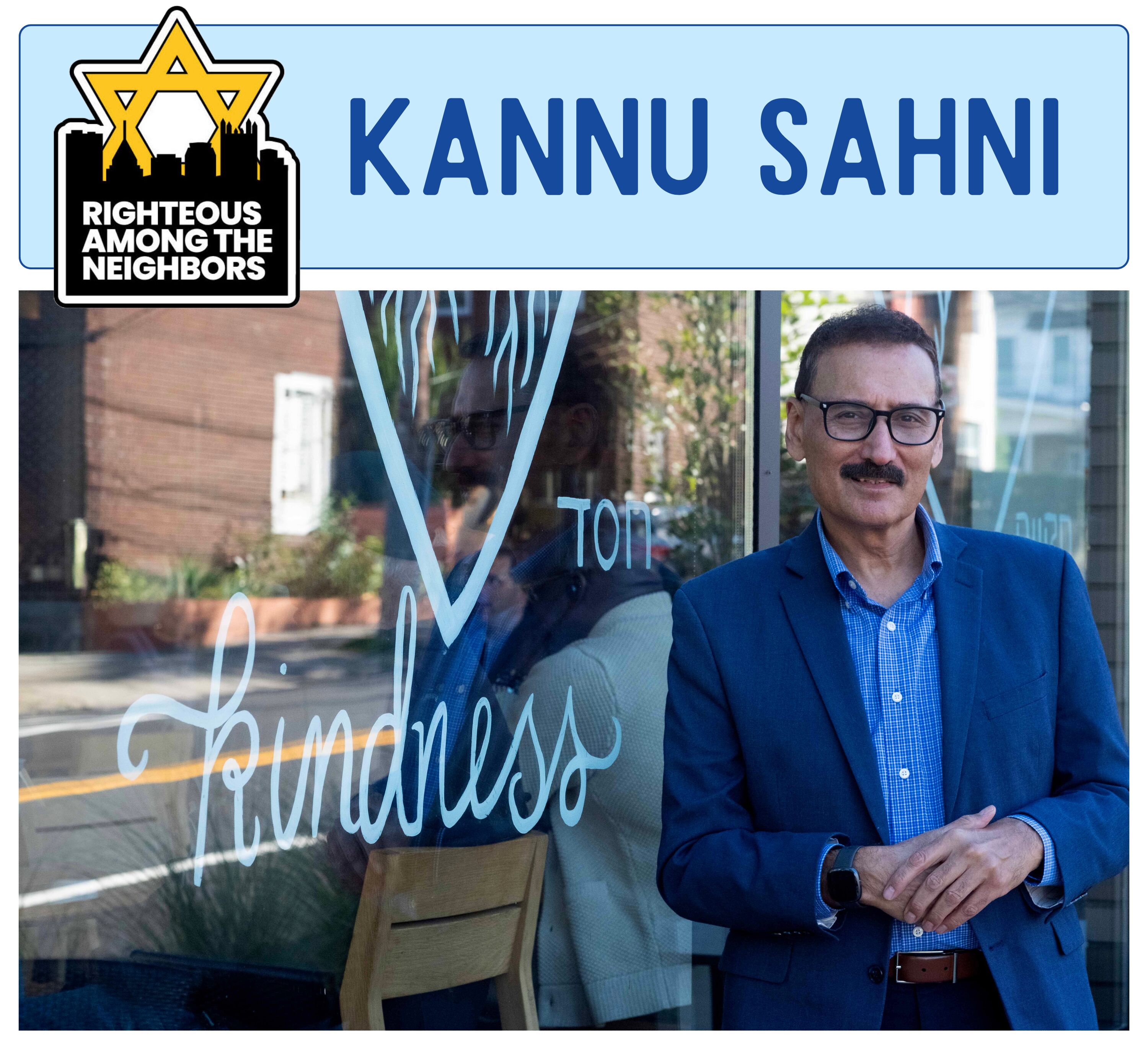
Kannu Sahni first came to Jewish Family and Community Services because he needed career direction.
“I was trying to understand my strengths and where I could be useful,” Sahni said. “The support I received helped me get centered. I stayed connected because I believed in what the organization was doing. I believed in the work.”
Sahni, who would go on to become the first non-Jewish board member of JFCS, has now been nominated by Dana Gold, Chief Operations Officer of JFCS as Righteous Among the Neighbors.
Gold’s connection to the Jewish communities of Pittsburgh is deep. She has been a long-time leader in an organization that serves both Jewish Pittsburgh and refugee and immigrant families throughout Western Pennsylvania.
She first met Sahni when he applied to JFCS for career guidance. The counselors recognized his talent for working with people and helped him transition into a role where he supported clients seeking employment. He later continued to work alongside JFCS while working in other institutions across the city, and then was invited to join the board of the organization.
Over many years, Gold observed how Sahni listened, how he treated others with dignity and how he acted without needing acknowledgement.
“He had been part of the JFCS community as a client, a colleague and a partner,” Gold said. “When it came time to expand the board so that it reflected the diverse communities we serve, he was the clear and natural choice. He understood the mission because he had lived it.”
His role became especially meaningful in the period following the Pittsburgh synagogue shooting, which targeted Dor Hadash, New Light, and Tree of Life. JFCS was one of the central organizations providing support during that time. Staff members were grieving, families needed care, and community members struggled with fear and sorrow. There were long meetings, difficult decisions, and constant changes in emotional and practical needs.
Gold described Sahni’s role as steady and consistent.
“He showed up whenever we needed to gather the board,” Gold said. “He listened closely. He encouraged the team. He helped us stay grounded. He helped us think about how to support the Jewish community, while also remembering that the refugee and immigrant communities felt the impact as well. His presence mattered.”
When asked why he continued in this work, Sahni did not describe it as a single choice.
“I have always believed that if you are part of a community, then you show up for it,” Sahni said. “I was supported by JFCS when I needed it. So when the community needed support, I showed up.”
The journey affected him as well.
“When someone finds their footing again, you learn how much is possible when people are treated with care,” Sahni said.
He also spoke about supporting the development of UpStreet, the teen mental health program at JFCS that provides care in ways that are accessible, practical, and non-intimidating. During the pandemic, when isolation harmed many young people, UpStreet made a real difference. This deep involvement clearly left a lasting impression on Sahni, informing his own philosophy of service.
“JFCS has shaped my entire approach to community service,” Sahni said.
“They pair professionalism and competence with compassion and care.”