Righteous Among the Neighbors is a project of the Holocaust Center of Pittsburgh that honors non-Jewish Pittsburghers who support the Jewish community and take action to uproot antisemitism. In partnership with the LIGHT Education Initiative and Mt. Lebanon High School, student journalists interview honorees and write profiles about their efforts.
Article by Abby Sohyda
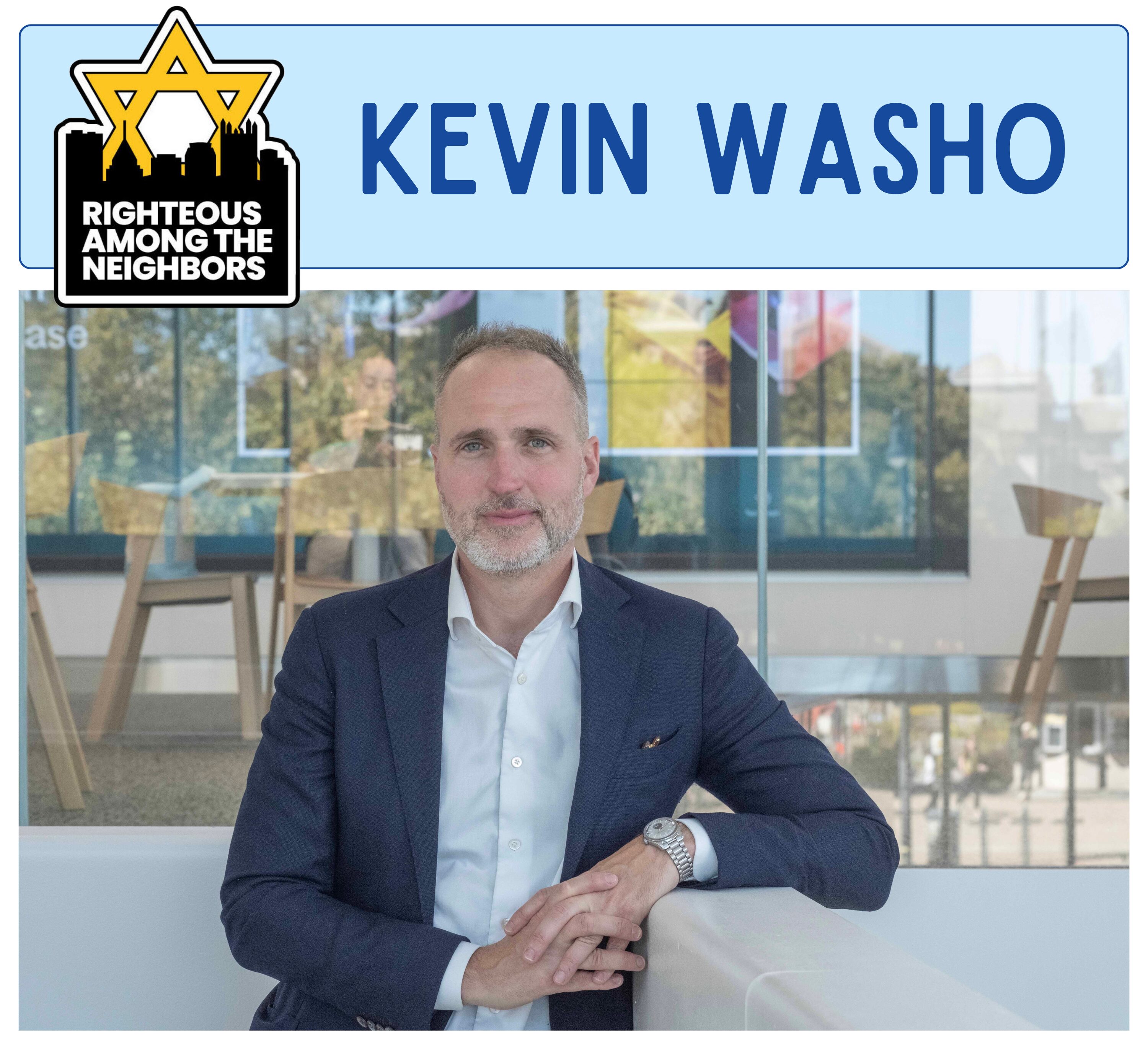
Day-to-day life is busy as the Senior Vice Chancellor at the University of Pittsburgh. Juggling everything from alumni engagement to government relations and advocacy leaves a consistently full schedule. However, for Kevin Washo, these responsibilities are only part of a much larger mission to create a more accepting environment for everyone on campus, including the Jewish community.
Rabbi Shmuli Rothstein believes this makes him the perfect candidate to be recognized as Righteous Among the Neighbors.
“He’s a family man,” Rabbi Rothstein said. “He connects with people, but he’s not just working off emotions or feelings. He is well-educated and he understands what the story is.”
Washo joined the University of Pittsburgh professionally eight years ago, but he was also a student there, and he always made sure to foster a community of acceptance on campus.
“I had a friend whose name was Brian Gold who I met when I was running for student government president,” Washo said. “He took me to my first Shabbat dinner way back in 2002 and I’ve felt a connection to the community since.”
When Washo returned to Pitt, he was happy to continue building on the connection.
”It was a natural progression of that relationship,” Washo said. “I’ve gotten to meet so many wonderful people.”
Rothstein sees Washo’s ability to help others as one of his most impactful traits.
“He’s someone I can truly admire,” Rabbi Rothstein said. “He’s a good man with a big heart and a loving smile. He’s just a very real person to everyone he meets.”
More specifically, Rabbi Rothstein highlighted the work Washo has done with Jewish students on the campus of the University of Pittsburgh.
“He fights for everyone,” Rabbi Rothstein said. “I would say he is one of the keys to why the Jewish community at Pitt is thriving.”
Washo doesn’t only work with students on campus on a day-to-day basis. He goes above and beyond behind the scenes and serves on the Antisemitism Working Group at the University of Pittsburgh.
“We look at all aspects of stopping antisemitism, whether it be on the Pitt campus or within the broader community,” Washo said. “Being on the committee and talking to members of the committee has beat my original thinking of how important the Jewish community is to Pitt.”
Rabbi Rothstein, who met Washo through his work at Pitt, has admired Washo’s work since they met.
“Most of our interactions have been professional, but I believe I’ve had the pleasure of being friends with him,” Rabbi Rothstein said. “I find that our moral compasses align pretty strongly, and I really appreciate his place in my life.”
Washo works tirelessly to protect the Jewish community, and when he heard of Rothstein’s nomination, he was honored.
“When I first heard I was nominated, I was really humbled because all I’m trying to do is the right thing,” Washo said. “The fact that someone thought I made a large impact and took the time to nominate me is very meaningful to me.”
Even through all the praise, Washo was insistent that he has gained more from those around him than he had given.
“However long I’m at Pitt and working with all the people here, the thing that I’m taking away the most out of my years here are really the people I’ve met,” Washo said. “I am lucky to work with the people I get to work with on a daily basis. I wake up every day thinking about how blessed I am. It’s all about the people.”
But inclusion and understanding doesn’t end on the campus of the University of Pittsburgh. Washo believes that fostering a better, more inclusive environment across the country is achieved through one, simple action: communication.
“I think you really have to communicate,” Washo said. “The more you interact with students and people around you, the more you get to know people on a real human level.”