Righteous Among the Neighbors is a project of the Holocaust Center of Pittsburgh that honors non-Jewish Pittsburghers who support the Jewish community and take action to uproot antisemitism. In partnership with the LIGHT Education Initiative and Mt. Lebanon High School, student journalists interview honorees and write profiles about their efforts.
Article by Emma Curren
The history of tension between the Jewish and Lutheran religions goes back to when Lutheranism was founded. This history, built on hate, is a problem across the world. However, people like Kurt Kusserow are taking steps to mend and eradicate this antisemitic history.
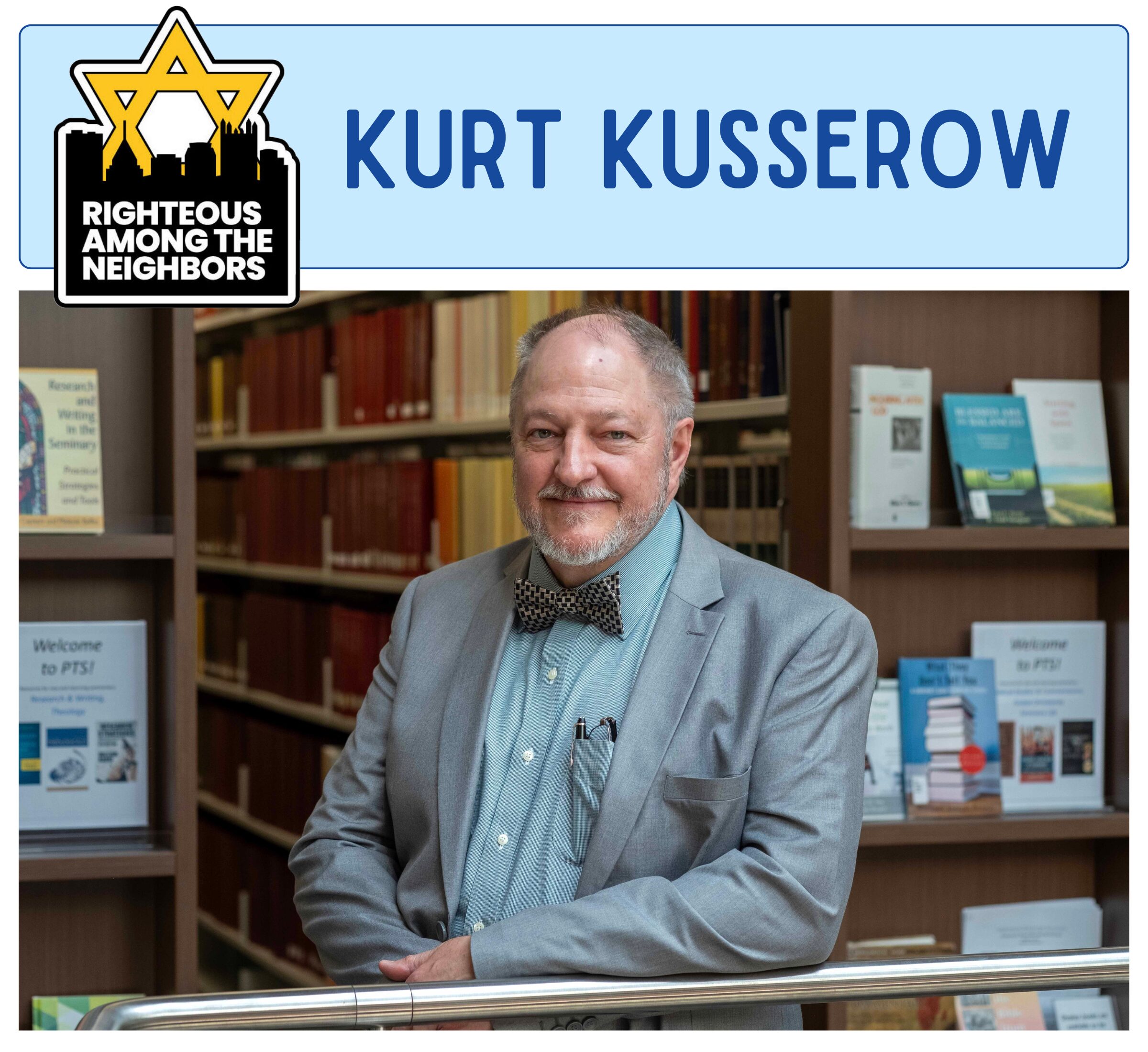
Kusserow, Bishop Emeritus of the Western Pennsylvania Synod of the Evangelical Lutheran Church in America (ELCA), has been recognized as Righteous Among the Neighbors for his honesty, humility and willingness to grapple with antisemitism in his religion.
Kusserow’s upbringing as the son of Lutheran missionaries in Singapore and Malaysia shaped who he is today.
“That childhood upbringing outside of this country informs a lot of who I am,” Kusserow said.
Kusserow ended up moving back to the United States for college and determined that he wanted to enter the ministry. In 2007, he was elected bishop of the Western Pennsylvania Synod of the ELCA, overseeing nearly 200 congregations.
Kusserow was nominated for the Righteous Among the Neighbors award by Noah Schoen, the Manager of Community Engagement at the Holocaust Center of Pittsburgh. Schoen works on finding ways to teach non-Jewish people about antisemitism and supports them in addressing it in their communities.
Kusserow and Schoen met through a program called Reckoning with Antisemitism as Christians, where Kusserow was on a panel of Christians who talked about their personal journey of reckoning with antisemitism and how it affected them.
“[Kusserow] spoke with a lot of vulnerability about how difficult it was to face the presence of antisemitism in the Lutheran tradition and really modeled to everyone who was there what humble and meaningful Christian engagement on this topic could look like,” Schoen said.
Kusserow and Schoen then went on to create a special initiative where groups of Lutheran pastors who meet in different parts of Western Pennsylvania to have a text study are visited by rabbis once a month to bring their perspective and support the pastors to reckon with antisemitism.
“It’s just been such a good thing to see,” Kusserow said.
The moment that made Kusserow realize he had to confront antisemitism in his community was when he learned more about the tarnished relationship between the Lutheran and Jewish traditions. Martin Luther, the founder of the Lutheran tradition, made extremely antisemitic comments during his life and also wrote hateful things about Jews.
“Our church has said, ‘that’s not who we are,’” Kusserow said. “We reject that as inappropriate and hurtful, and we want to do better.”
After learning about this, Kusserow found a spark and desire to have better relationships in his lifetime. The church began to actively learn and grow to develop positive relationships with Jewish people. One of the main ways they went about accomplishing this is through a document called “Preaching and Teaching with Love and Respect for the Jewish People.”
“[The document] was a desire to show Lutheran Christian preachers how to talk about things, both in the Bible and in our history, that were unfortunate, and how to do a better job,” Kusserow said.
Kusserow has also written a book called What is the Gospel?, and he gave Schoen a copy so that he could read it and understand his perspective on Christian issues. While reading, Schoen encountered “a handwritten sticky note where [Kusserow] suggested an edit to the original text to avoid a word that could potentially have a slight connotation associated with antisemitism.”
“I thought, wow. He took the time to read over his whole book before giving it to me because he wanted to improve it from a perspective of addressing antisemitism,” Schoen said. “I think it shows his integrity, humility and understanding that for Christians reckoning with antisemitism, it is an ongoing process.”
Kusserow encourages his community to learn more about antisemitism and get them involved by doing things such as leading special text studies on challenging passages in the New Testament, spreading awareness and showing his commitment to this work.
Kusserow’s example has been followed by Melissa Stoller, the current Bishop of the Southwestern Pennsylvania Synod of the ELCA.
“[Stoller] has also been extremely supportive of the Reckoning with Antisemitism as Christians project,” Schoen said. “We expect to continue our partnership with the ELCA moving forward and have many different Lutheran pastors and community members who will continue to engage in this project.”
Kusserow has seen a positive impact in his own personal life and others’ lives from the work he has done with the Jewish community. His work teaches him “more about [himself] and the world [he] lives in.”
“So often, people live in a small circle of knowledge and comfort that leaves very little reason to go beyond that,” Kusserow said. “When there’s an opportunity to open doors and see things that are not in your normal circle of life, you find things that you have been missing.”
Schoen appreciates everything that Kusserow has done across his community, noting how his “humble” demeanor brings about positive change.
“It’s not just what Bishop Kusserow has done,” Schoen said. “It’s what he has encouraged and sparked so many others to do as well.”